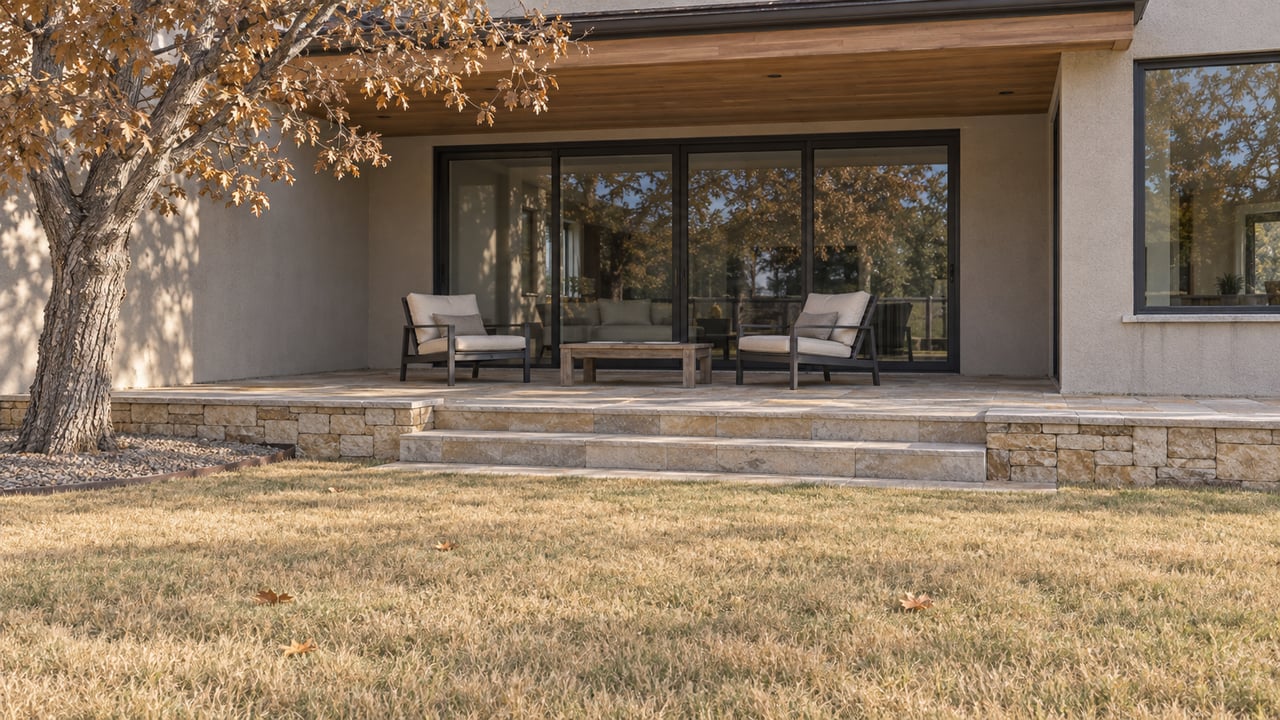
Why Saddle Rock Golf Course Is Going Cart-Path-Only This November
October 29, 2026
"Due to Stage 1 Drought and dry conditions currently affecting the golf courses, we will be restricting use of golf carts until spring 2027." That line comes from the City of Aurora's offseason announcement for Aurora Golf. It explains why Saddle Rock Golf Course changes this Sunday, and why the change will last a while.
The city calls cooler-weather restrictions at its five courses "common practice." This year the announcement ties the cart limits to the drought and carries them until spring 2027. The fairways behind many Saddle Rock homes now run on a reduced water allocation. Your lawn has been on one since spring. Your sprinklers went off in mid-October for the same reason the carts are being restricted.
Daylight saving time ends Sunday, Nov. 1. Aurora Golf goes back to split tee times and carts are restricted across the system that day. Each course follows its own rule until the next step.
The rules also cover more than carts. Bicycles, one-wheels, scooters, electric boards and similar personal transport devices are banned, and the city will look at them again when regular cart use returns. Push carts and pull carts are allowed. If you need a cart because of a mobility limitation, the city asks you to talk with staff.
Aurora City Council adopted a Stage 1 drought resolution on April 6, 2026. It took effect right away, and Aurora Water set a goal of cutting water use 20% across the city. According to Sentinel Colorado's report that day, snowpack in Aurora's three supply basins was about 36% of the historical median, and reservoir storage was roughly 57% of capacity.
Things got worse after that. In June, Colorado moved its statewide drought declaration to Phase 3. Sentinel Colorado reported that the change left Aurora's local Stage 1 rules where they were. Aurora is still in Stage 1 as this post publishes. Aurora Water's drought page shows total storage of 40% of active capacity in its Oct. 12, 2026 reservoir summary.
Here is what that number is made of:
| Reservoir | % full, Oct. 12, 2026 |
|---|---|
| Aurora Rampart Reservoir | 93% |
| Quincy Reservoir | 84% |
| Aurora Reservoir | 68% |
| Shared storage in other reservoirs | 36% |
| Spinney Mountain Reservoir | 27% |
| Jefferson Lake | 0% |
| Total | 40% |
The table shows how Aurora Reservoir can look fairly healthy while the system as a whole is low. Aurora Reservoir holds 21,156 of its 31,064 acre-feet of active capacity. Spinney Mountain is the system's largest single reservoir, with 53,651 acre-feet of active capacity, and it holds just 14,638. In its own words, the city says getting back to sustainable levels "will take time and likely require several wet winters."
The golf announcement gives no firm date for carts to return beyond spring 2027. It says updates will come "as soon as conditions allow for any change in cart access."
The city's announcement says dry conditions have put "heightened stress on the turf." It adds that limiting cart traffic is needed to protect the playing surfaces and prevent long-term damage.
The course is also getting less water. Aurora Golf says it works within a seasonal water allocation, and that its courses use moisture monitoring and targeted irrigation, and are not allowed to water between 10 a.m. and 6 p.m. Colorado Politics reported in July that Stage 1 cuts commercial allocations, golf courses included, by 20%.
The city also explains how it decides where that smaller allocation goes. On its city facilities drought page, Aurora says it puts primary golf-play areas first, along with youth athletic fields and high-use park space. It waters less-used park and golf areas less and lets some of that turf go dormant. If you see green fairways with tan, rough edges along Saddle Rock's out-of-play areas, that is what the plan looks like on the ground. The same page says some city parks, golf courses and facilities use treated reclaimed water, which keeps reservoir water free for other uses. It doesn't list which properties are in that group.
Most homes around the course have been under these rules since April. Under Stage 1, non-drip outdoor irrigation is limited to two days a week. A watering cycle that starts one evening and runs past midnight counts as two days. Lawns on a residential meter had to stop irrigating by Oct. 15. Multifamily and HOA areas that aren't communal use had to stop by Oct. 1, and communal-use space by Oct. 15. Stage 1 also bans installing new cool-weather turf.
On Sept. 28, City Council added a winter ban on spray irrigation. According to the city's watering restrictions page, it runs from Oct. 1 to April 30 in most areas and from Oct. 15 to April 30 in high-traffic active-use areas such as residential yards, parks and athletic fields. Colorado Politics' Oct. 21 report on the ordinance notes that golf courses also count as high-traffic areas. So the fairways next to your yard follow the same spray-irrigation calendar as your lawn.
The early results are measurable. In the same Colorado Politics story, Aurora Water Conservation Manager Tim York said the city averaged about 32 million gallons a day for outdoor use from Oct. 1 to Oct. 5, 2026. The historical average for those days is 59 million gallons. Outdoor use usually falls in October, but York credited the September ordinance for how much lower it was this year.
The rules have penalties too. Aurora Water's drought page lists a surcharge of $2.15 per 1,000 gallons for residential, multifamily and commercial accounts that use more than 110% of their winter-quarter average. The same page lists fines that follow a first-violation warning. Single-family accounts pay $125 for a second violation and $250 for a third. Multifamily, commercial and irrigation accounts pay $250 and $1,000.
The next few months are still playable if you walk. A few details help with planning:
The city ties this winter's cart limits to the drought and says they last until spring 2027, with updates as conditions allow. Aurora Water's drought page tracks those conditions, and its Oct. 12, 2026 summary put total storage at 40%.
This post is general information about city rules and isn't legal or financial advice. For your own account or property, confirm the details with Aurora Water or the right professional.
If you have questions about how this winter's water rules affect a home near the course, whether you're keeping it, fixing it up or getting it ready for spring, I'm glad to talk them through. That's part of what "Service Beyond the Sale" means at The Loveridge Group. Let's Connect.
Stay up to date on the latest real estate trends.




Let's Connect and figure out which tier of this market is really the one you're shopping in.
A relocation like that doesn't happen because someone wanted a change of scenery.
Experience seamless real estate services with Jim Loveridge, innovative tools, and personalized support, making property buying, selling, and management easy and efficient.